Most concentration errors are not exotic — they are the same few mistakes made over and over. Learn to recognise them and your solutions will be right the first time. Here are the offenders, ranked roughly by how often they trip people up.
1. Dividing by millilitres instead of litres
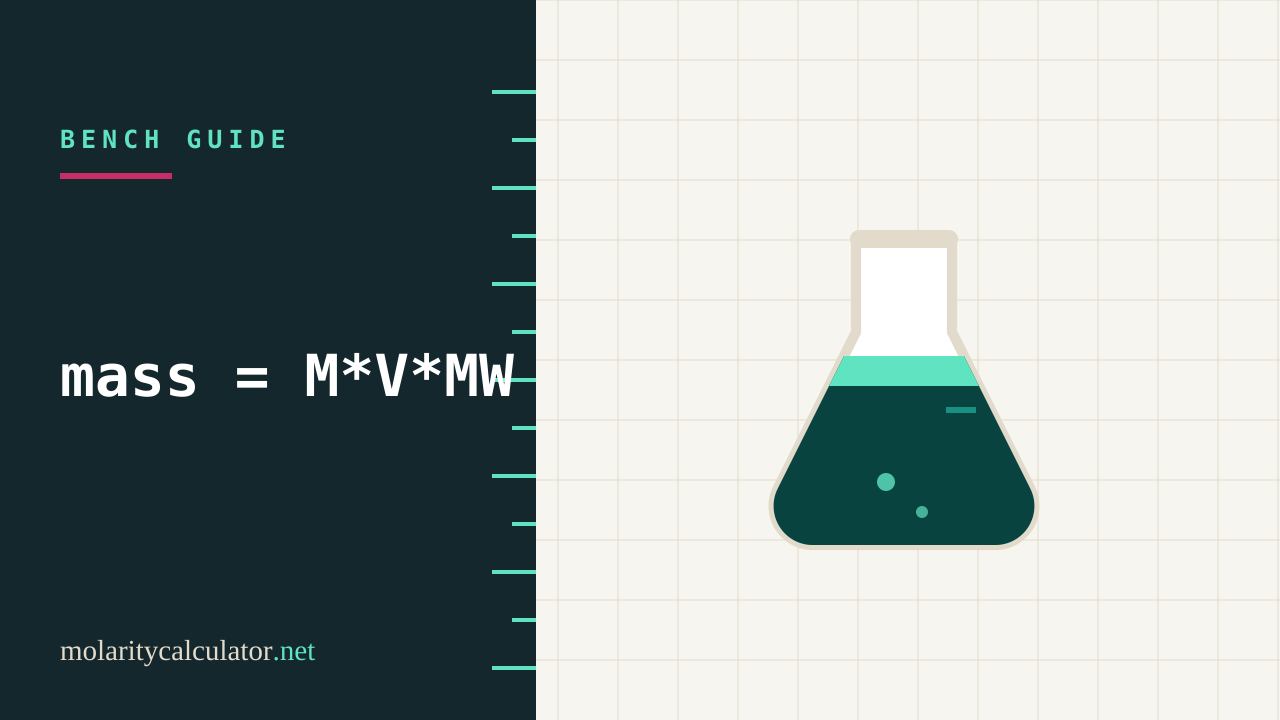
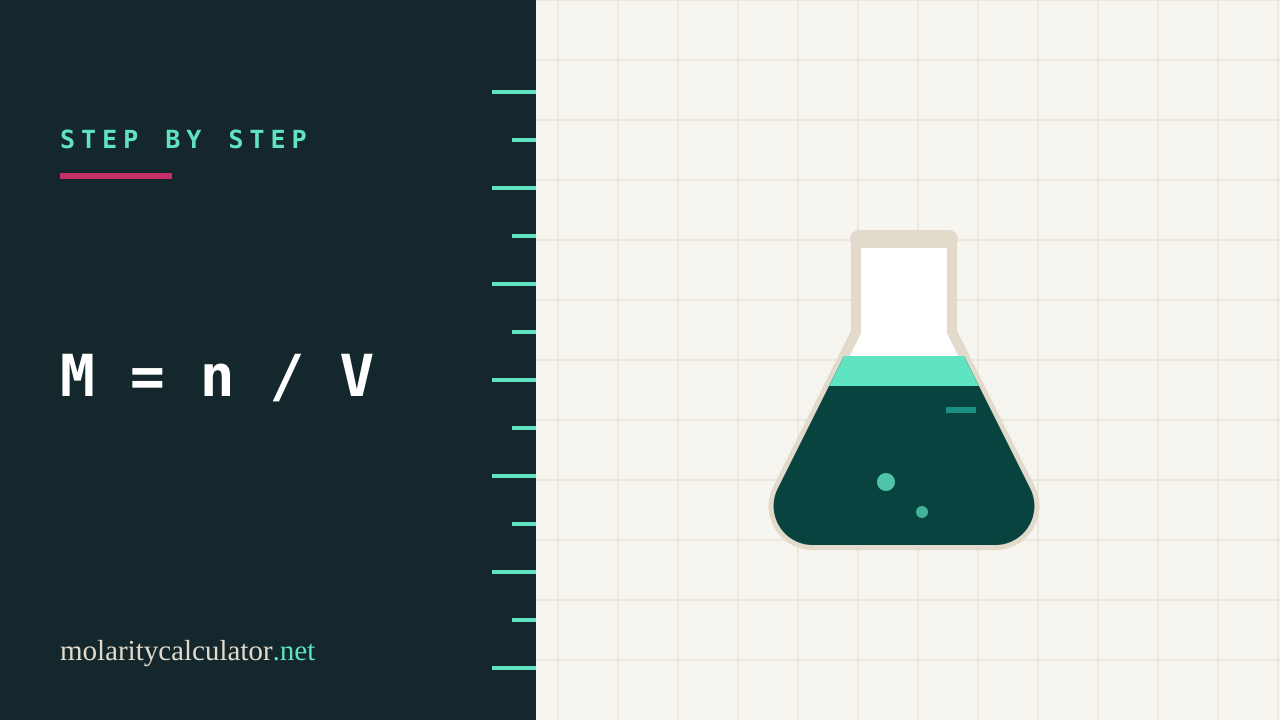
Molarity is mol/L, so volume must be in litres. Dividing moles by a millilitre figure gives an answer a thousand times too small. Convert first: 250 mL is 0.25 L. This single slip accounts for an enormous share of wrong answers in homework and at the bench alike.
If a molarity comes out absurdly large or tiny — thousands of molar, or micromolar when you expected molar — suspect a millilitre/litre error before anything else.
2. Ignoring water of crystallisation
Hydrated salts carry bound water that adds to their molar mass. Weighing copper sulfate pentahydrate (249.69 g/mol) but calculating with the anhydrous value (159.61 g/mol) makes the solution too dilute by more than a third. Always match the molar mass to the exact form on the bottle. Our molar mass calculator handles the ·nH2O notation directly.
3. Adding solute to a full flask
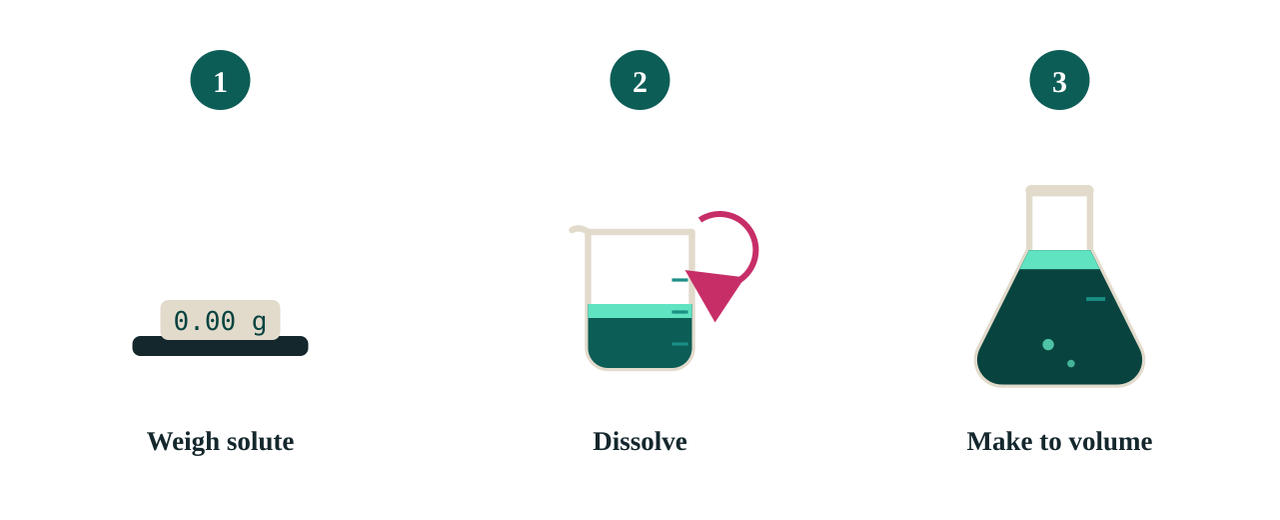
If you fill the flask to the mark with solvent and then add solute, the solute pushes the volume past the line and the concentration ends up low. Dissolve in part of the volume first, then make up to the mark. This is the physical reason molarity is defined per litre of solution, not solvent.
4. Misreading the meniscus
Reading the liquid level from above or below introduces parallax error that can be several percent on a small flask. Lower your eye to the calibration mark and align the bottom of the meniscus with it. See using a volumetric flask for the technique.
5. Rounding too early
Rounding the molar mass or an intermediate result before the final step propagates error through the calculation. Carry at least one extra significant figure throughout and round only the final answer to the precision your work requires.
6. Using the wrong glassware
Beakers and conical flasks have wide tolerances and are for mixing, not measuring. For an accurate final volume use a volumetric flask; for accurate transfers use a pipette or burette. Graduated cylinders sit in between — fine for rough work, not for standards.
7. Not labelling immediately
An unlabelled or wrongly dated bottle is a safety hazard and a source of mystery results. Label with identity, concentration, initials, and date the moment the solution is made, and note any storage requirements.
A thirty-second check with the molarity calculator after you calculate — confirming the mass and the units — catches nearly all of these before you weigh anything.
Recommended lab gear
Some links below are affiliate links. As an Amazon Associate we earn from qualifying purchases, at no extra cost to you. See our affiliate disclosure.
Volumetric Flask Set (Class A)
Class A borosilicate flasks for making solutions to an exact volume.
View on Amazon