A buffer is a solution that resists changes in pH when small amounts of acid or base are added. Because so many reactions — enzymatic, electrophoretic, cell-based — only behave reproducibly within a narrow pH window, buffers are among the most-used solutions in any life-science lab. This guide covers the chemistry and the practical preparation.
How a buffer works
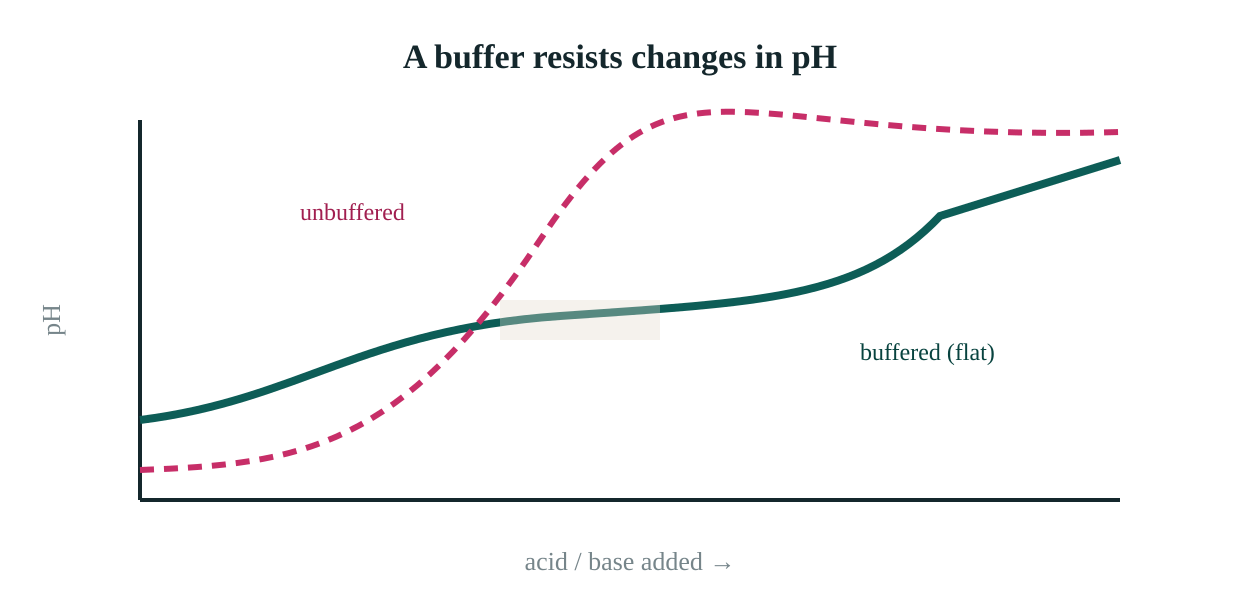
A buffer contains a weak acid and its conjugate base in comparable amounts. When you add acid, the conjugate base mops up the extra protons; when you add base, the weak acid releases protons to replace those consumed. The pair acts like a chemical shock absorber, and the pH barely moves until the buffer is exhausted.
The Henderson-Hasselbalch equation
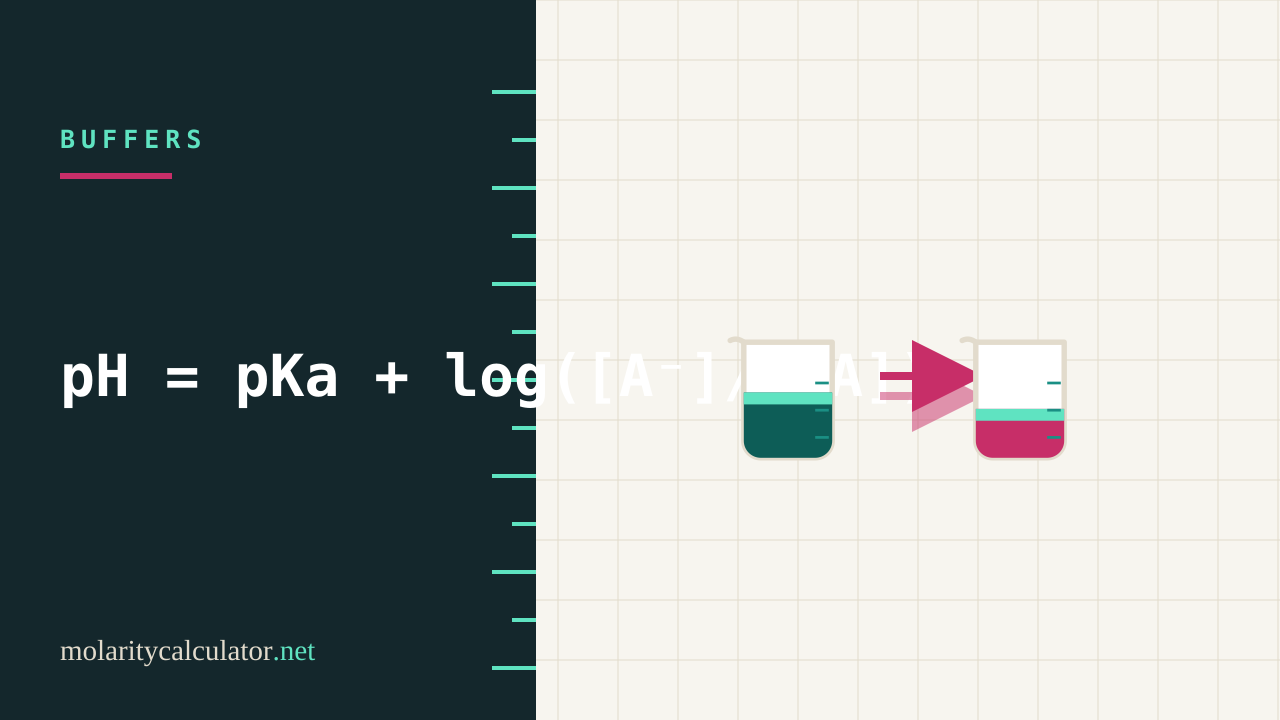
The pH of a buffer is governed by the ratio of conjugate base to weak acid:
When the two are equal the log term is zero and the pH equals the pKa. This is the key to choosing a buffer: pick a weak acid whose pKa is within about one unit of your target pH, so the ratio stays in a workable range.
Choosing the right buffer
| Buffer | pKa (25°C) | Useful pH range |
|---|---|---|
| Acetate | 4.76 | 3.8 – 5.8 |
| MES | 6.1 | 5.5 – 6.7 |
| Phosphate | 7.2 | 6.2 – 8.2 |
| HEPES | 7.5 | 6.8 – 8.2 |
| Tris | 8.1 | 7.0 – 9.0 |
Preparing a buffer at the bench
There are two common routes. You can dissolve calculated amounts of the weak acid and conjugate base from the Henderson-Hasselbalch ratio, or you can dissolve one form and titrate to the target pH with strong acid or base while monitoring a calibrated pH meter. The titration route is forgiving and is what most labs use day to day.
Calibrate the pH meter with fresh standards before you start, and adjust pH at the temperature you will use the buffer. Tris in particular shifts roughly −0.03 pH units per °C, so a buffer set to pH 8.0 in a cold room will read differently on the bench.
Concentration and capacity
Buffer capacity — how much acid or base it can absorb before the pH shifts — rises with concentration and is greatest when pH equals pKa. Typical working buffers run from 10 to 100 mM. Too dilute and the buffer is quickly overwhelmed; too concentrated and you may disturb ionic strength or precipitate components.
Ready-made recipes
For exact, scalable recipes of the buffers you will reach for most, see our recipe library, including 1 M Tris-HCl, 1× PBS, and 50× TAE. Each page scales the quantities to any final volume you enter.
Recommended lab gear
Some links below are affiliate links. As an Amazon Associate we earn from qualifying purchases, at no extra cost to you. See our affiliate disclosure.
Volumetric Flask Set (Class A)
Class A borosilicate flasks for making solutions to an exact volume.
View on Amazon