Not every concentration is a molarity. Walk through any lab or read any product label and you will see percentages: 0.9% saline, 70% ethanol, 10% SDS. Percentages are quick to make and easy to communicate, but only if everyone agrees which kind of percentage is meant. This guide clears that up.
The three kinds of percentage
A percentage is parts per hundred, but the parts can be measured by mass or by volume, giving three conventions:
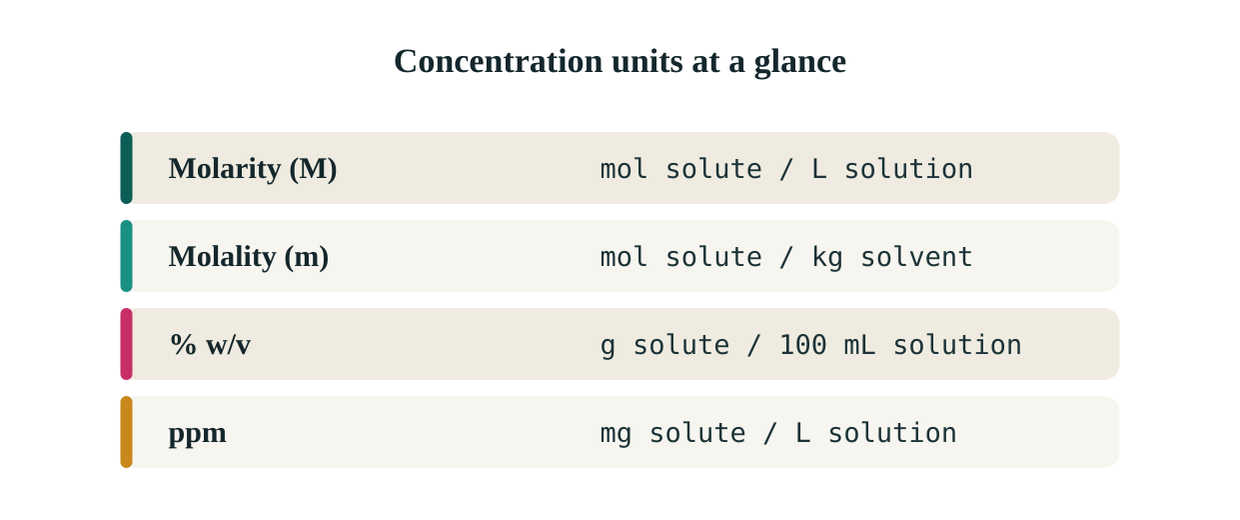
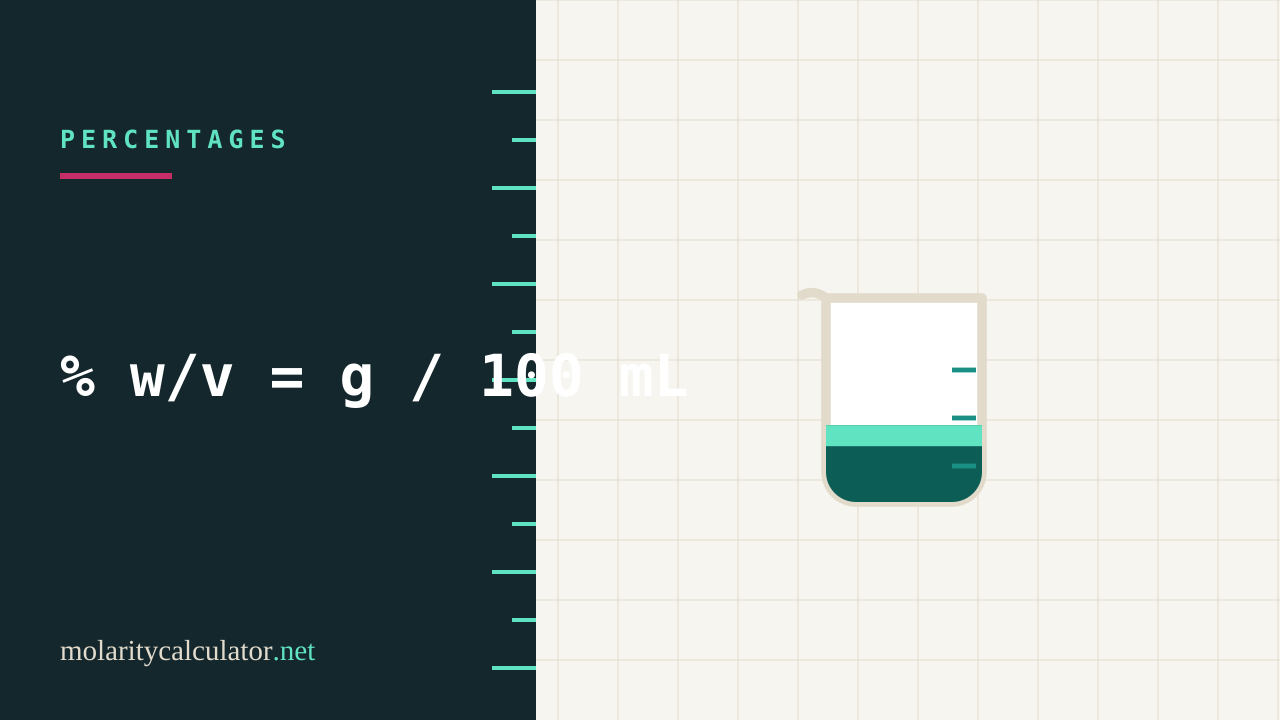
- % w/v (weight/volume) — grams of solute per 100 mL of solution. The most common in biology. 0.9% w/v saline is 0.9 g NaCl per 100 mL.
- % v/v (volume/volume) — millilitres of liquid solute per 100 mL of solution. Used for liquid-in-liquid mixes such as 70% v/v ethanol.
- % w/w (weight/weight) — grams of solute per 100 g of solution. Standard for concentrated acids and many industrial reagents, e.g. 37% w/w hydrochloric acid.
Making a percent solution
For % w/v, weigh the grams equal to the percentage and dissolve to 100 mL (scale up proportionally for larger volumes). For 500 mL of 10% w/v SDS, that is 50 g made up to 500 mL. For % v/v, measure the liquid volume and make up to the total — for 70% ethanol from absolute ethanol, mix 70 mL ethanol with water to 100 mL.
Percentages do not need a molar mass, which is why they are convenient for solutes whose molar mass is awkward or undefined, such as detergents and serum.
Converting percent to molarity
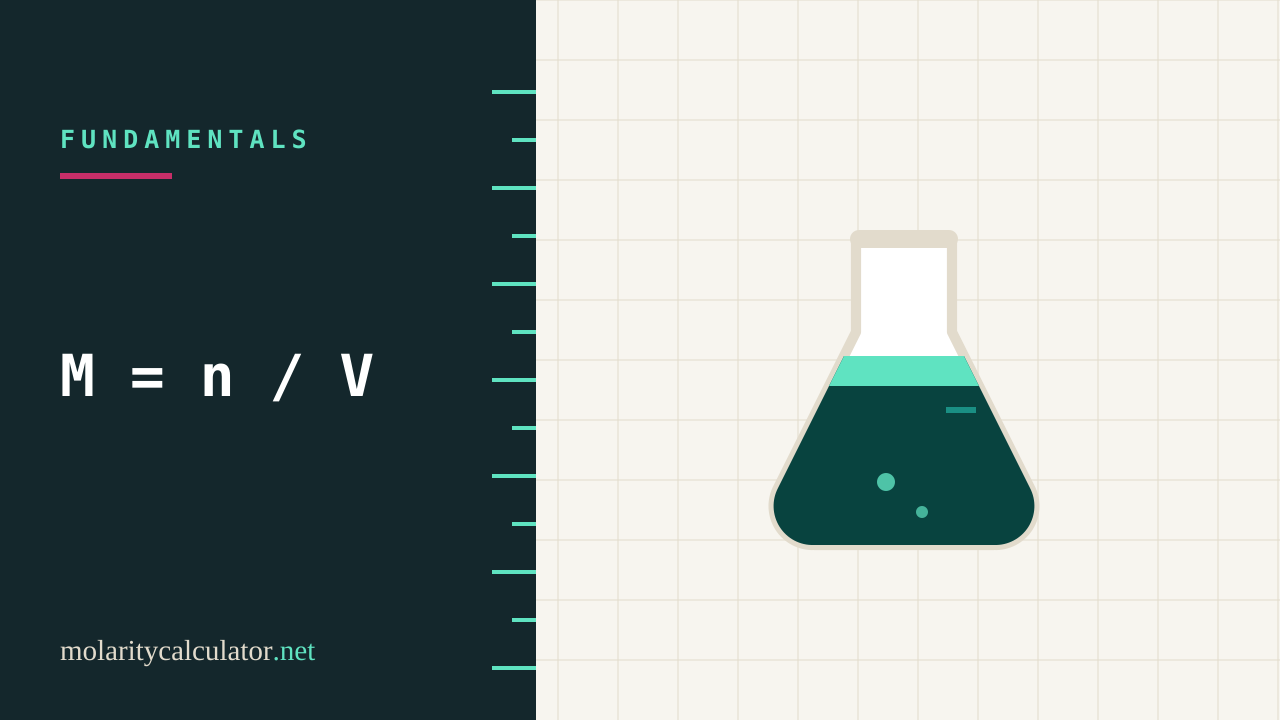
To convert % w/v to molarity, turn grams per litre into moles per litre by dividing by the molar mass. A 0.9% w/v NaCl solution is 9 g/L; divide by 58.44 g/mol to get 0.154 M — the familiar concentration of physiological saline. For % w/w you also need the solution density to find the mass in a given volume first.
The factor of ten converts grams-per-100-mL to grams-per-litre. The molar mass calculator supplies the MW, and the molarity calculator confirms the final figure.
Beyond percentages
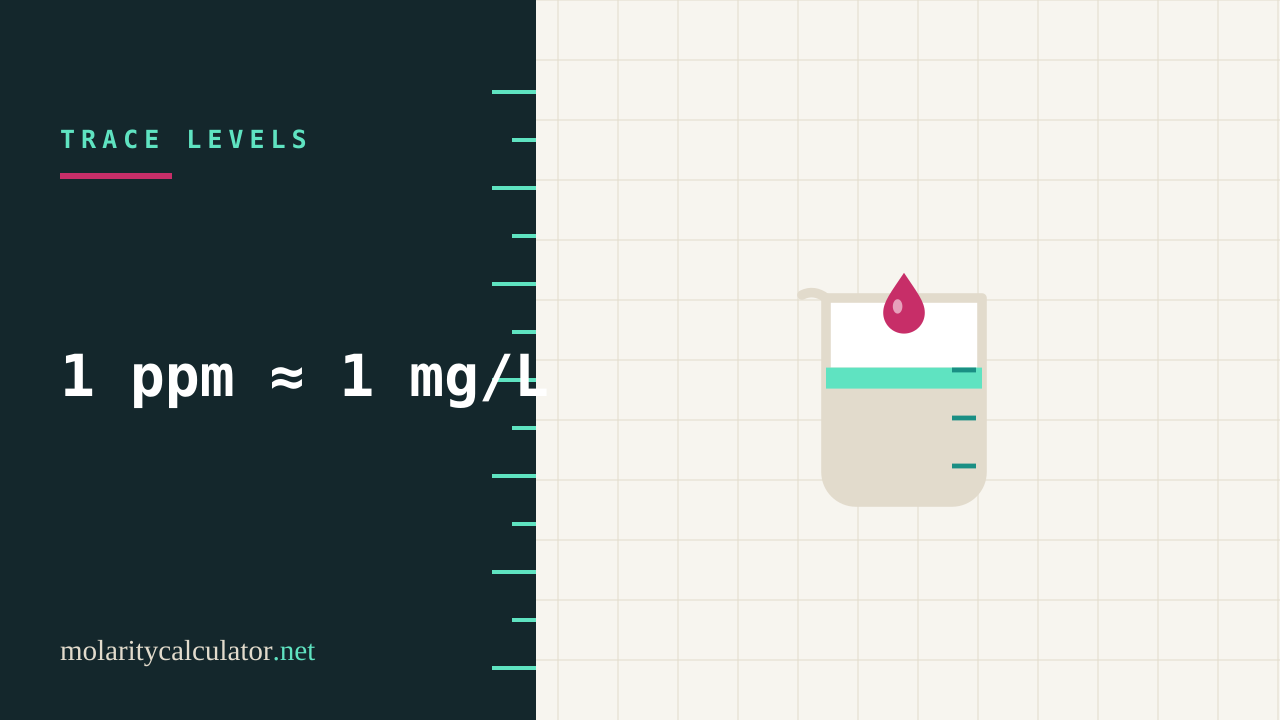
For very dilute solutions, percentages become unwieldy and parts per million takes over — one ppm is roughly 1 mg per litre in water. We cover that scale in parts per million and parts per billion.
Recommended lab gear
Some links below are affiliate links. As an Amazon Associate we earn from qualifying purchases, at no extra cost to you. See our affiliate disclosure.
Volumetric Flask Set (Class A)
Class A borosilicate flasks for making solutions to an exact volume.
View on Amazon